News & Advice

Adapting with nature at Tākaka Hill
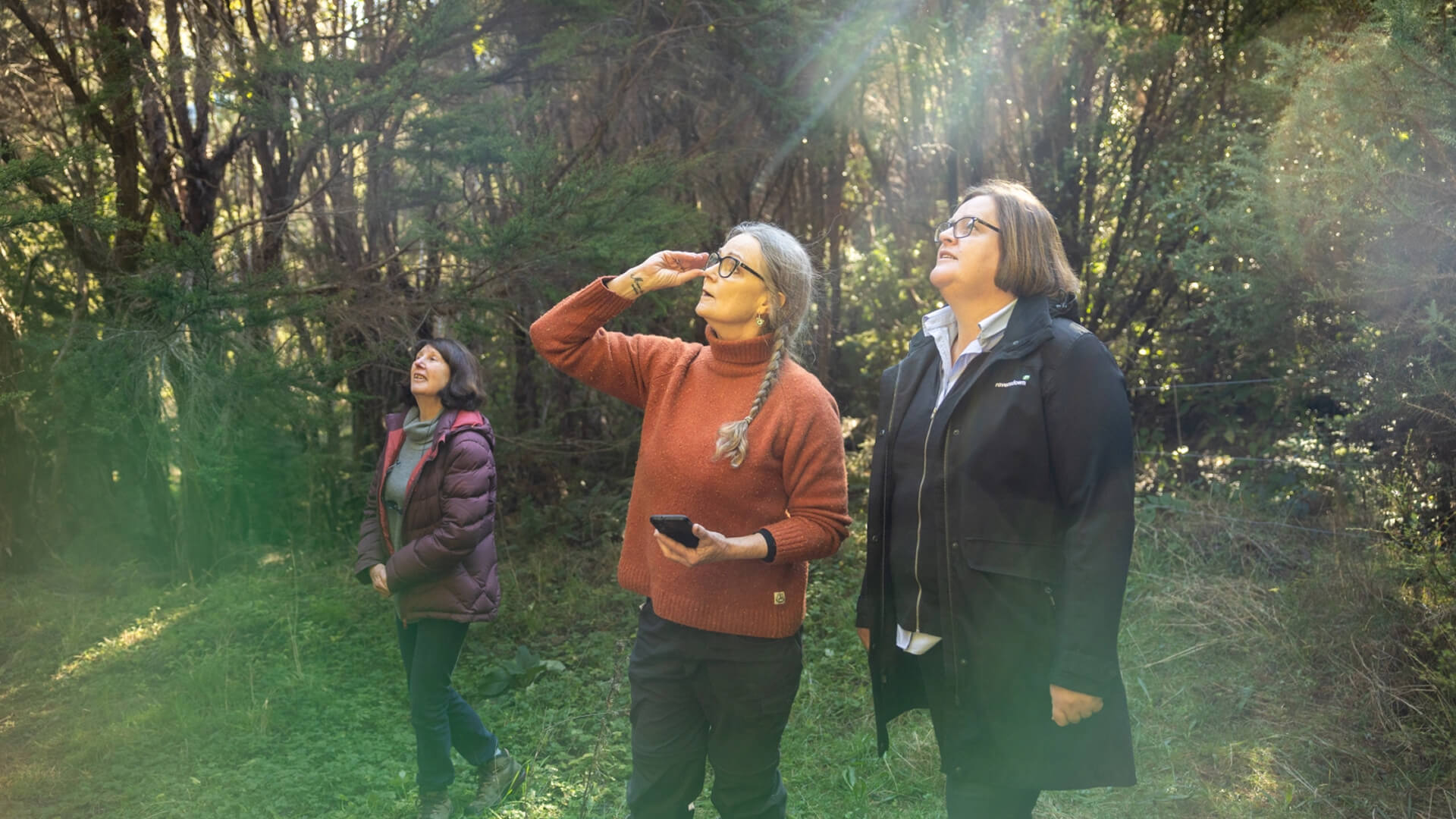
Anna Wilkes, Chief ESG and Safety Officer at Ravensdown with Trust members Charmaine Petereit and Wendy Henderson.
It’s not every day you find a member of one of the most threatened species in the country in your back yard, but Charmaine Petereit did in January and her husband Norman spotted two more.
It was Naultinus stellatus, the Nelson Green Gecko which has more than a passing resemblance to a child’s painting of a lizard. It has a vivid, bright green body with star-shaped splodges – that’s where the stellatus comes in.
“It’s certainly bright and very green, but when it’s in the natural environment it is extremely difficult to spot because it blends in so well,” says Charmaine.
“They are also very solitary creatures, so they are not usually found together unless it’s the mating season”.
The geckos made a smart choice of Petereit’s back yard since the couple belong to the Tākaka Hill Biodiversity Trust where Charmaine is Project Manager. The area is significant due to its limestone geology and native flora and the Petereit’s land, regenerating after grazing, adjoins the Kahurangi National Park.
Established in 2018 by local landowners, the Trust isn’t kidding about its biodiversity mission.
Having committed funding over three years, Ravensdown supports the Trust to restore and protect the Tākaka Hill ecosystems, control predator and pest species, achieve diversity gains over the next 30 years and increase the density and abundance of Tākaka Hill indigenous flora and fauna. Their holistic approach spans all biodiversity disciplines, eradicating pests and invasive plants, culling wild goats, planting to create fauna-friendly environments, and undertaking species surveys and meticulously mapping its work, the results and the resulting data.
Charmaine says the Trust sees a bigger biodiversity picture and is working to create safe ecosystem corridors across private land and into the Abel Tasman and Kahurangi National Parks. Its work supports the re-established local populations of kākā, pāteke and whio as well as roroa.
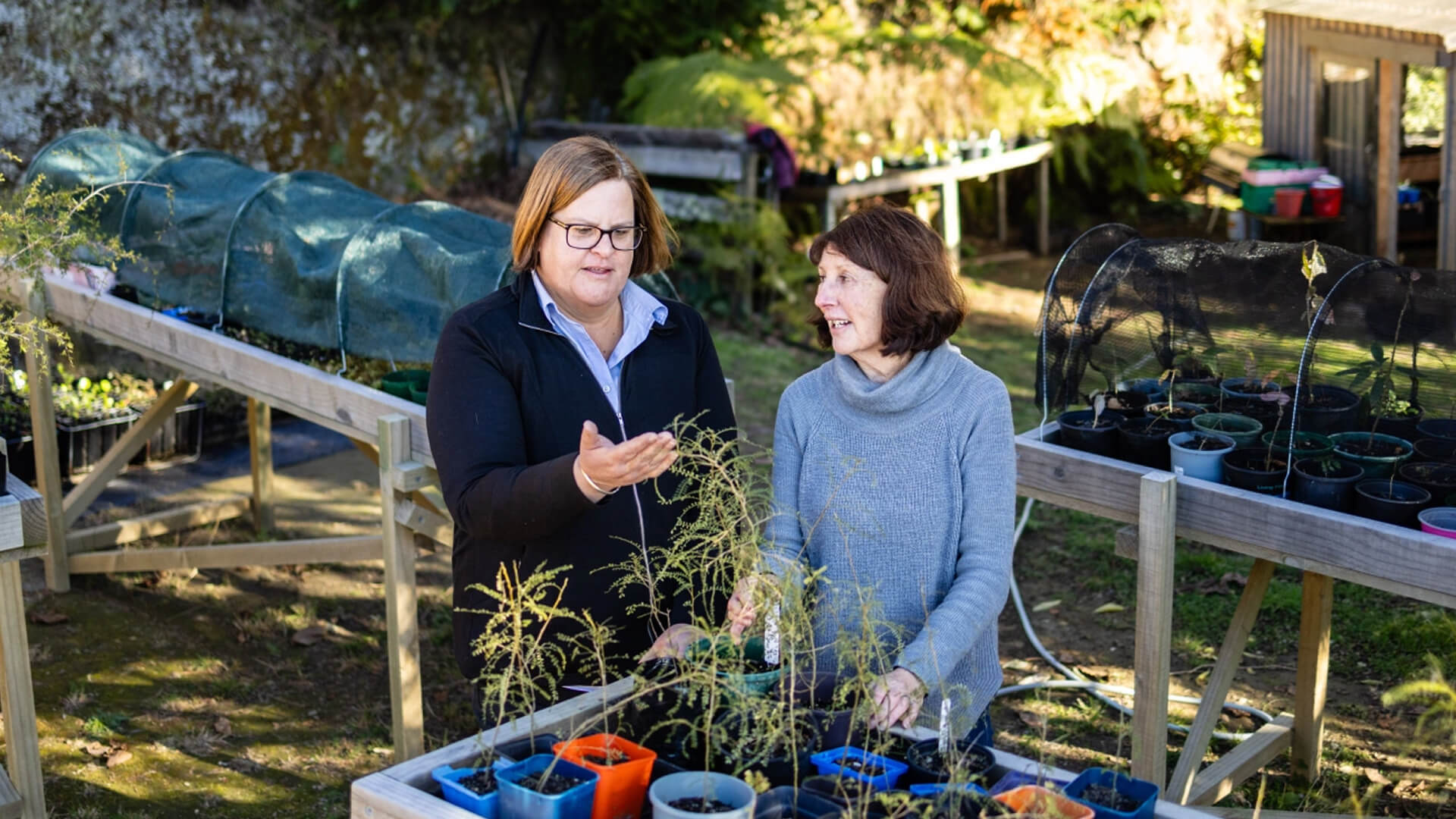
The green gecko also benefits from these corridors, along with the equally impressive carnivorous giant land snail Powelliphanta hochstetteri which is closely monitored as a biodiversity indicator.
Charmaine says the Trust’s results-based approach has helped it secure funding which is especially vital in the current environment with a diminishing funding pool for key programmes including wilding pine eradication.
“Ravensdown’s financial support is a lifeline. It is enabling the trust to keep going to maintain our hard-won social licence. We’re having to cut our cloth accordingly, so some work is being reduced. But the value of a collaborative partner like Ravensdown is that we can show other potential supporters that we have secure funding. In many cases you are expected to show you have a third of the costs covered before a funding organisation will consider your application.”
Anna Wilkes, Ravensdown Chief Environment and Sustainability Officer, says the Trust and the company have enjoyed a good working relationship for some time, but it was time to do more.
“As a co-op we have come to the realisation that it’s not enough to be solely working on greenhouse gas mitigations or improving waterways. We need to work towards a positive outcome for the whole environment and we have an opportunity to do this through the Trust. This is what they do well and we want to build on the relationship.
Ravensdown has committed some $30,000 over three years to support biodiversity work on Tākaka Hill and to be used as a lever to enable the Trust to attract further funding.
As Anna says, “we can go out and plant trees, but we’re not always very good at maintaining them. We are better off funding the Trust because it goes directly to the people who are getting their hands dirty. We are beginning in a small way, but we are looking at this as a potential model for other partnerships where the outcome is positive for the environment as a whole.
“We are choosing to make a positive impact and that’s something our shareholders are aiming to do every day on their own properties, so it makes sense.”