Early season nitrogen fertiliser application for sheep and beef farms

Updated: 8 July 2026
Early season nitrogen fertiliser application can be a useful tool for sheep and beef farms where extra pasture growth is needed ahead of lambing/calving and lactation.
The decision is usually made before peak feed demand arrives. Where soil moisture, soil temperature, pasture cover and grazing management are suitable, nitrogen may help increase pasture growth and provide extra feed when it can have the most value in the farm system.
Early nitrogen is not a blanket recommendation. It will not suit every farm, every paddock or every season. It should be considered alongside your feed budget, current pasture cover, likely pasture response, paddock selection, grazing plan, product choice and wider nutrient plan.
This guide explains where early season nitrogen may fit in a sheep and beef system, how application timing affects response, and what to consider before applying.
Contents
- When to apply nitrogen ahead of lambing and peak feed demand
- How early nitrogen can support lambing and lactation
- How application timing can affect nitrogen response
- How to choose the right paddocks
- Seasonal outlook and dryland feed planning
- When may early nitrogen not be the right option?
- What nitrogen fertiliser should I use?
- How nitrogen fits with your wider nutrient plan
When to apply nitrogen ahead of lambing and peak feed demand
Nitrogen fertiliser needs to be applied several weeks before the extra feed is required.
This timing is important because pasture response takes time. Plants need to take up nitrogen, convert it to protein and express the growth response before the extra pasture can be grazed.
For sheep and beef farms, Ravensdown guidance is to apply nitrogen three to four weeks before additional feed is needed. Tactical nitrogen use four to six weeks before lambing or calving can also help lift pasture production to meet increased feed demand from lactating ewes and cows, where conditions are suitable.
Late winter and early spring can be a useful timing window on sheep and beef farms because soil nitrogen supply is often low coming out of winter. Lower clover growth, lower nitrogen fixation, lower mineralisation and recent leaching can all contribute to significant nitrogen deficiency in pasture.
The aim is not simply to apply nitrogen early. The aim is to grow feed ahead of a known demand period, then use that feed well.
Application rate should be matched to the feed required and the likely pasture response; 25–50 kg N/ha is often an efficient and practical range for a single application.
How early nitrogen can support lambing and lactation
Where conditions are right, early nitrogen application may help lift pasture production ahead of lambing and lactation.
That extra feed can support pasture covers, ewe condition, milk production and lamb growth, during an important part of the season. If more lambs can be finished earlier, feed demand later in the season may reduce. That can help ease pressure on pasture and give breeding stock more opportunity to regain condition before the next mating round.
The value of early nitrogen depends on whether it is filling a real feed gap. If the farm is already in a strong pasture position, or the extra feed cannot be utilised, nitrogen may not deliver the return you are looking for.
How application timing can affect nitrogen response
Nitrogen response varies through the year. It is influenced by soil moisture, soil temperature, pasture cover, and grazing management.
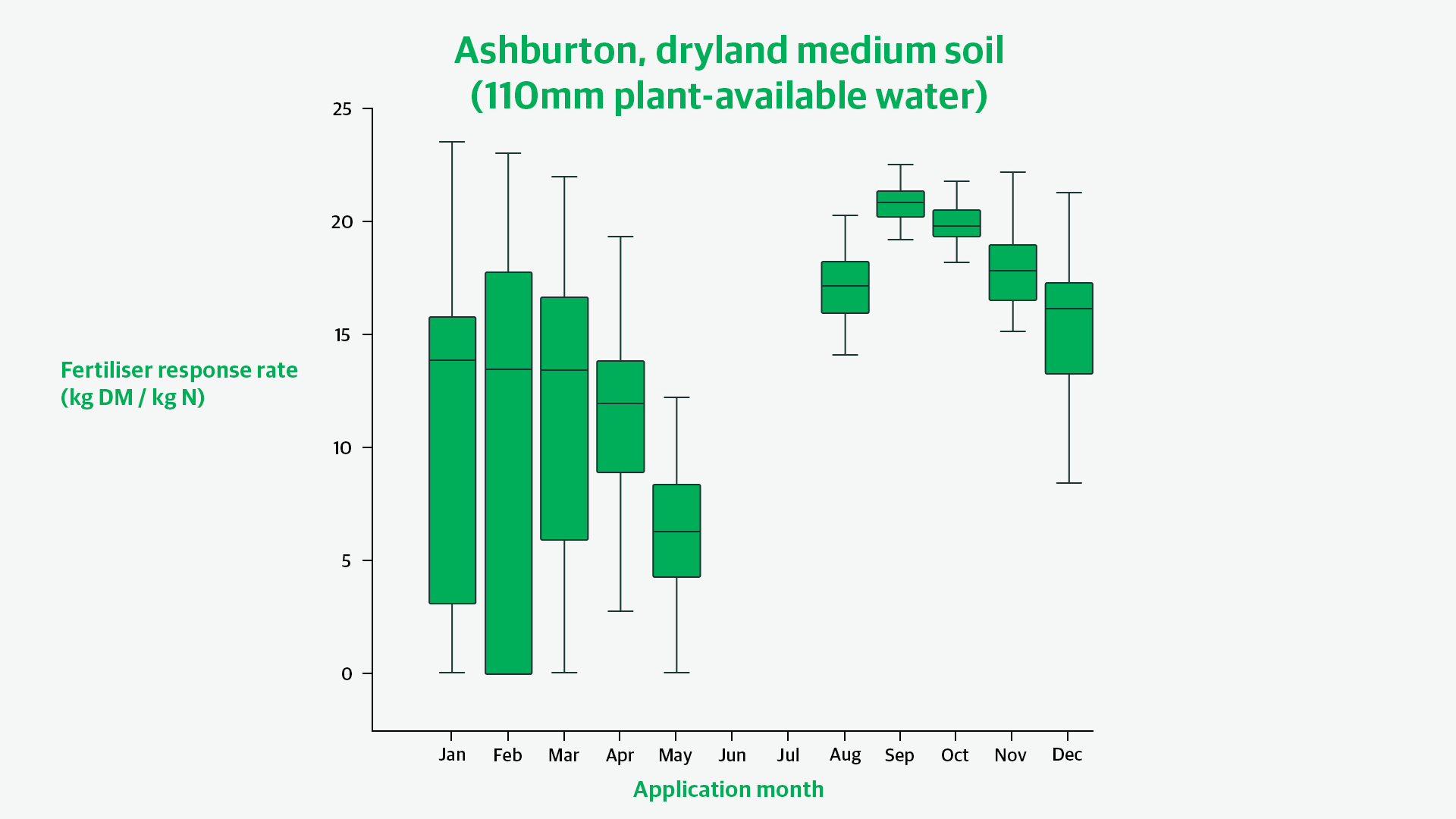
Late winter and early spring can be a valuable window for nitrogen use on sheep and beef farms. Feed demand is increasing rapidly, while soil nitrogen supply is often low after winter. Reduced clover growth and nitrogen fixation, lower mineralisation rates, and nitrogen losses through winter leaching can all contribute to nitrogen deficiency in pasture at this time of year.
The graph above shows the modelled pasture response to nitrogen fertiliser throughout the year for a typical soil in Ashburton, assuming suitable soil conditions (e.g. not waterlogged). The higher and more consistent responses in late winter and early spring highlight that pastures are often highly responsive to nitrogen during this period. Actual responses will vary depending on soil moisture, soil temperature, pasture cover, fertility, and grazing management.
Nitrogen is most effective when pasture is actively growing and not limited by moisture, temperature, or other constraints. Applying nitrogen when soils are too cold, too dry, or waterlogged is less likely to result in a worthwhile pasture response.
A useful response also depends on grazing management. Pasture needs time after application to take up nitrogen and express additional growth before it is grazed.
How to choose the right paddocks
Early nitrogen is most useful where the pasture response can be grown and grazed effectively.
Prioritise paddocks where:
- pasture is actively growing
- soil moisture and soil temperature are suitable
- there is enough pasture cover to support a response
- stock can utilise the extra feed
- base fertility is not very low (e.g., Olsen P >10)
- ideally the paddock can be spelled after application
- there is higher demanding stock e.g., ewes with multiples
Avoid hard grazed paddocks. Pasture needs enough leaf area to capture sunlight and support a good nitrogen response.
On hill country farms, both slope and aspect can influence pasture responses to nitrogen. In lower-rainfall environments (e.g. less than 800 mm annual rainfall), steeper slopes and north-facing aspects can often produce larger responses to nitrogen fertiliser, provided soil moisture and base fertility are adequate. These areas are commonly more nitrogen deficient because clover growth and nitrogen fixation are lower than on the cooler, moister south-facing slopes, where clover can remain active for longer through the growing season.
In late winter and early spring, north-facing slopes also tend to warm more quickly, which can further support pasture growth and nitrogen response.
Seasonal outlook and dryland feed planning
Seasonal conditions and climate outlooks can significantly influence feed planning from year to year, particularly on dryland sheep and beef farms.
The latest Earth Sciences New Zealand seasonal outlook can be a useful tool when planning for the season ahead. A drier-than-normal outlook may increase the value of growing additional feed early, while conditions are still suitable for a good pasture response. However, decisions should always be based on the conditions and feed requirements of your own farm.
Where seasonal forecasts indicate an increased risk of dry conditions, consider whether growing extra feed in late winter or early spring could provide greater flexibility later in the season, for example by helping more lambs reach target weights earlier.
If your region is not forecast to be dry, nitrogen may still have a role where feed demand is greater than feed supply and conditions are favourable for a pasture response.
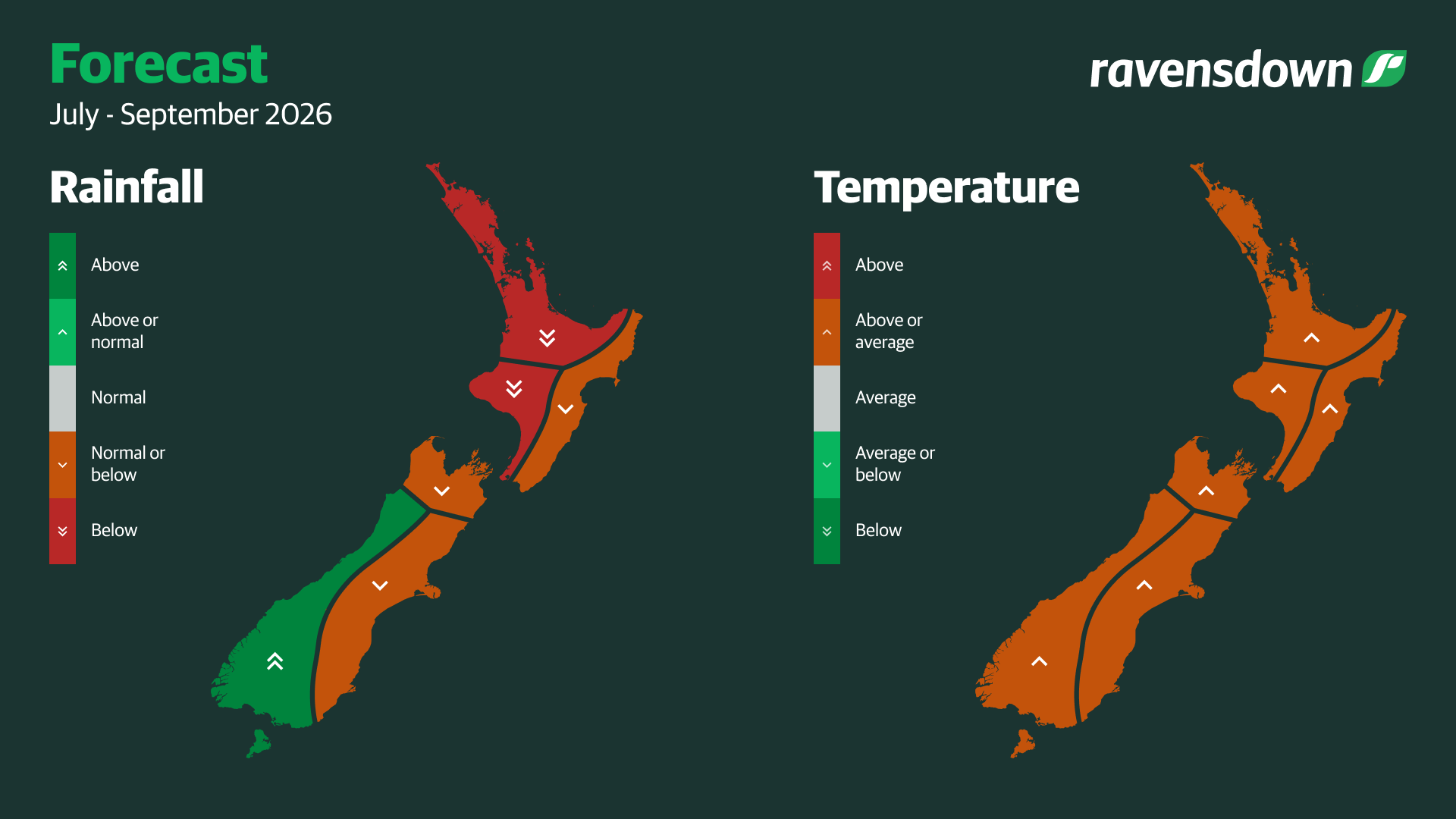
Seasonal outlooks can be a valuable planning tool, but they are not a guarantee of what will happen. Like any weather forecast, they provide an indication of the most likely conditions rather than a certainty. They are best used alongside local knowledge, current farm conditions, and regular monitoring throughout the season.
Regional considerations
For dryland farms in the northern North Island and east coast regions, late winter and early spring can be an important opportunity to grow feed while soil moisture is reliable. In seasons where lower rainfall is forecast, reviewing the spring feed plan early may be especially valuable.
For western and central North Island areas, rainfall patterns may differ, but nitrogen can still have a role where feed demand is greater than supply and conditions are suitable for pasture response.
For the West Coast of the South Island and Southland, seasonal forecasts suggest rainfall may be above normal this season. When making decisions about early-season nitrogen, the same principles still apply: consider feed demand, expected feed supply, paddock conditions, likely pasture response, and how nitrogen fits within the farm's wider nutrient plan.
Current seasonal planning note
Reviewed: 8 July 2026
Earth Sciences New Zealand’s July to September 2026 seasonal outlook indicates El Niño conditions have been reached in the tropical Pacific, with a strong event increasingly likely. For dryland sheep and beef farms in regions with higher seasonal dry risk, this makes feed planning ahead of lambing and lactation especially important.
A seasonal outlook should be used as one input into planning. The right decision will still depend on soil moisture, soil temperature, pasture cover, feed demand, predicted feed supply, grazing plans and your wider nutrient plan.
When may early nitrogen not be the right option?
Early nitrogen will not suit every farm, every paddock or every season.
It may not be the right option where:
- there is no clear feed gap to fill
- pasture covers are already in a strong position
- paddocks are hard grazed, leaving too little green leaf for pasture to respond well to nitrogen
- soils are too cold, too dry or too wet
- base fertility is limiting pasture response
- stocking rate, subdivision or grazing control limit utilisation
- the expected response does not stack up against the cost
The strongest responses come when nitrogen is filling a genuine feed gap, pasture conditions support growth, and the extra feed can be used well.
Poor utilisation can reduce the value of the response, especially where stocking rate, subdivision or grazing control limit how effectively the extra pasture can be eaten. Weather after application can also affect the result.
That is why early nitrogen is best treated as a paddock-by-paddock feed-planning decision.
What nitrogen fertiliser should I use?
Urea and N-Protect* can both have a role in sheep and beef fertiliser plans. The right option depends on your farm, timing and conditions.
Urea is a commonly used nitrogen fertiliser. N-Protect is treated urea designed to help reduce nitrogen loss from volatilisation in certain conditions.
N-Protect may be worth considering where volatilisation risk is higher, such as when conditions are dry, windy or warm, or when more than 10 mm of rainfall within 8 hours of application is not expected.
Where volatilisation risk is part of the decision, the choice between urea and N-Protect should be based on timing, expected rainfall, application conditions and how much nitrogen loss risk you are trying to manage.
Product choice should come after the feed-planning decision. First consider whether there is a genuine feed gap, whether pasture conditions are suitable, which paddocks are most likely to respond, whether the extra feed can be utilised, and how nitrogen fits with your wider nutrient plan.
How nitrogen fits with your wider nutrient plan
Nitrogen should not be considered in isolation.
It needs to fit alongside the wider nutrient plan, including pH, phosphorus, potassium and sulphur. Soil test results, base fertility, recent nutrient applications all affect how well pasture responds to nitrogen and the amount of feed that can be grown throughout the season.
Sulphur may also be worth discussing, particularly after a wet winter, on some soil types, or where sulphur has not been applied recently. Consider how wet the previous winter has been, the likelihood of leaching, soil type, when sulphur was last applied, how much was applied and what recent soil test results show.
Early nitrogen can support short- to medium-term feed supply, but long-term pasture production still depends on good base fertility.
Talk to Ravensdown before your spring application window
Before making a decision, talk to your local Ravensdown Agri Manager about your feed budget, pasture covers, soil conditions, likely response, paddock selection, product choice and wider nutrient plan.
*N-Protect contains 300 ppm active ingredient NBPT. Registered pursuant to the ACVM Act 1997, No. P010198.
It is an offence to feed this product directly to animals.
A minimum 3-day withholding period for grazing, applies following N-Protect application.


